
Fake ID websites have stepped up their game in 2026, churning out as many as 20,000 documents each day. About 32% of college students have a fake ID, and many see it as their first step into adulthood. The consequences of this trend go way beyond just getting into bars or buying drinks.
The market for scannable fake IDs has evolved into something much more sophisticated. These days, more than 60% of forged IDs come with encoded barcodes that match what’s printed on the card.
Some sellers brag that their products pass UV light and magnification checks 89% of the time, but the dangers are still real.
Students might know where to find these fake ID websites easily enough, but these sites collect everything from photos and birthdates to addresses and payment info. The legal stakes are high too – you could face felony charges in states with tough penalties.
Let’s get into what these fake ID websites really offer, how much they cost (basic IDs start at $150), and what it all means for your wallet and your future.
Why People Still Buy Fake IDs in 2026
Almost half (45%) of U.S. adults aged 18-25 know someone who has used a fake ID to get into age-restricted places or buy products. This eye-opening stat shows that fake ID markets are still going strong in 2026, despite better tech and tougher rules.
Research shows 30% of young adults have thought about buying or already bought a fake ID. The question remains – why do so many young people take this gamble?
Cultural normalization among students
Getting a fake ID has shifted from a risky move to what many students call a college milestone. Research shows 38.5% of students owned a fake ID during their college years. Most students use them in their third year when they’re close to but not quite at legal age.
Students keep passing this habit down. “Fake IDs have gotten very normalized… People don’t really think about the repercussions when everybody around you has one“. The peer pressure hits hard – a survey of 215 students found that 24% felt pushed to get a fake ID.
Many students look up the best fake ID websites just to fit in, even if they don’t drink. A junior student got her fake ID just to buy drinks for friends and be part of the crowd. The link between fake IDs and campus drinking is clear – 83.1% of college students use their fake IDs to buy alcohol.
Access to age-restricted venues and products
The main reason students get fake IDs hasn’t changed – they want to buy age-restricted stuff and get into certain places. Liquor stores deal with 56% of all fake ID attempts. Students often look for scannable fake IDs that work with electronic checks.
Nightlife plays a big role too. Students at schools without frat houses hit up bars and clubs more often. Cities like Boston, New York, and Los Angeles see more fake IDs. Their buzzing nightlife scenes make fake IDs very tempting for underage students.
Alcohol delivery has opened up new ways to use fake IDs. About 20% of fake ID users try to order alcohol online. Online alcohol sales could hit $40 billion by 2026, and this trend keeps growing.
Common use cases for fake IDs include:
- Purchasing alcohol at liquor stores (56% of users)
- Accessing alcohol delivery services (20%)
- Entering cannabis dispensaries (19%)
Top 8 Fake ID Sites Compared 2026
A detailed look at the best fake ID websites in 2026 shows clear differences in quality, pricing, and special features. Here’s how the top providers compare based on customer feedback and service analysis.
1. IDTop.is
IDTop.is creates high-quality fake IDs with premium security features that scan through PDF format and BCS. Their products come with multi-layer holographic overlays and microtext printing. The company runs its own Hong Kong factory without outsourcing production to maintain quality standards. Each order comes with a free duplicate ID. The prices start at $150 for simple IDs, and group orders can save you 10-40%. Their IDs pass UV light and magnification checks 89% of the time.
2. Hotfakeid.com
Hotfakeid.com positions itself as a cheaper alternative at $80 per ID with a free duplicate. Customers can customize their signature, driver’s license number, and address details. The company uses Teslin and PVC materials—matching legitimate government IDs—with 300 DPI microprint and 30Mil card thickness. The trust rating sits at just 1.8/5 stars, and many customers say they never got their products after payment.
3. Fakeyourid.com
Fakeyourid.com (FYD) is over a decade old and serves as a trusted provider with many satisfied customers. The company merged with TopFakeID to create a joint production house that specializes in American fake IDs. Their products pass scanning tests 98% of the time and feature all security elements found in government IDs. Each ID costs $100 and comes with a free duplicate, though this price point is higher than other options.
4. IDGod.ph
IDGod.ph is 29 years old and produces scannable fake IDs with delivery times of 10-20 days. You’ll get two similar IDs as backup with every order. The IDs feature invisible UV details to pass blacklight tests. The company now focuses on customers aged 21 or older for USA IDs but makes exceptions for UK and Canada. Bulk orders come with substantial group discounts.
5. Bogusbraxtor.com
Bogusbraxtor claims to be the only online fake ID maker using polycarbonate for states that need this material. The IDs feature tactile text, optical variable ink with color-changing properties, microprint, UV ink, and laser perforation. Prices begin at $100 per ID, and group orders of five or more can save up to 50%. A free duplicate comes with each order.
6. FakeIDs.com
FakeIDs.com markets itself as a provider of “novelty ID cards for entertainment and display use” while delivering realistic products. The cards are made with 300 DPI microprint and 30 Mil thickness using professional materials (PVC, Teslin, or Polycarbonate). The creation process takes three steps: photo editing, digital mockup approval, and professional printing. The pricing structure is simple: $60 per person for 1-3 cards, $40 per person for groups of 4+.
7. TopFakeIDs.com
TopFakeIDs.com is 10 years old and makes scannable fake IDs with holograms, UV ink, and backlight tests. The company uses PVC, polycarbonate, or Teslin materials with 30Mil card thickness and 300 DPI microprint. Customer reviews give them a low 1.5-star rating, and many buyers report missing orders.
8. QualityFakeID.co
QualityFakeID.co is new to the market and produces novelty cards with UV ink details, hologram overlays, and microprint. The prices are much lower—first cards cost about $35, and additional cards are just $7 when ordered together. Free worldwide shipping is available, and group orders can save up to 75%.
The illusion of low risk
The scariest part? Most people think using fake IDs is no big deal. A 2024 survey found 71% of people said getting a fake ID was “somewhat easy” or “very easy”. Current fake ID users are confident too – 79% think they have less than a 25% chance of getting caught within a year.
Several things feed this false sense of security. Fake IDs look much better now. A liquor store manager said almost all fake IDs she sees pass the scanner test. Police also struggle to make fake ID cases stick unless they catch someone using one.
Students who get caught often face minor penalties. One student accidentally gave his fake ID to a TSA agent who didn’t spot the fake. Stories like these make students think using a fake ID online is safe.
All the same, having a fake ID can lead to serious legal trouble. Kansas law treats it as a Class B misdemeanor. Penalties include at least 100 hours of community service and fines between $200-500. But students often ignore these potential risks because fake IDs seem so normal.
How Fake ID Websites Work Behind the Scenes
The dark web’s fake ID operations thrive on a business model that makes use of advanced technology, careful distribution, and private financial transactions. These underground businesses run with remarkable speed. They handle thousands of orders and keep both sellers and buyers anonymous.
Order process and customization
Fake ID websites now employ AI neural networks and generators that create incredibly realistic documents. These services make counterfeit driver’s licenses and passports for 26 different countries, including the United States, Canada, Britain, Australia, and EU nations. Customers start by uploading passport-style photos and entering false personal details through the website. The site operators then turn these inputs into convincing forgeries.
These operations show their expertise through product quality. Premium fake IDs now come with holograms, working bar codes, and laser engraving that sometimes passes electronic scans. These IDs also include embedded data chips and security features like specialized engraving and imprints—features you’d only find in real government-issued ID cards.
Some vendors claim their products can get through Know Your Customer (KYC) checks at major financial institutions, including crypto exchanges like Binance, Kraken, and Coinbase. Prices differ between platforms. Some services sell IDs for just $15.00 each, making them easy to get for young buyers.
Shipping and stealth packaging
Best fake ID websites use smart shipping methods that avoid detection. These operations skip standard packages that might draw attention. They use what insiders call “discreet packaging”—a shipping method made to protect customer privacy for sensitive items.
This method includes several key parts:
- Plain white, kraft, or neutral-colored boxes with minimal or no branding
- Generic shipping labels featuring only tracking numbers and recipient addresses
- No visible company logos or product descriptions on exterior packaging
- Packages designed to blend with regular mail using standard sizes
Vendors hide their products in containers that look like everyday items such as laptop chargers or jewelry boxes. This smart packaging meets a real customer need—89% of American consumers would pay more for discreet packaging to avoid embarrassment. About 72% worry about judgment from store workers or other shoppers based on their purchases.
Some sellers mail their products late at night from public mailboxes to stay hidden. One case showed an Indianapolis resident who sent around 30,000 fake IDs across the United States this way.
Use of cryptocurrency for privacy
The fake ID online market runs on cryptocurrency transactions. Most big vendors take payments in different cryptocurrencies through Coinbase’s commercial payment service. Both parties get crucial anonymity and untraceable transactions.
Law enforcement has seen this pattern firsthand. FBI agents bought counterfeit New Mexico driver’s licenses from an illegal marketplace using cryptocurrency. These operations can be quite profitable—federal officials found one vendor who made about 14 Bitcoin (worth around $1.30 million) from his fake ID business.
Cryptocurrency payments help vendors dodge legal jurisdiction issues. Many fake ID operations set up shop overseas while serving American customers. This creates big challenges for U.S. law enforcement trying to stop these activities.
Through this mix of AI-powered customization, hidden shipping methods, and cryptocurrency payments, best fake ID sites run successful businesses despite serious legal risks for everyone involved.
Key Features of the Best Fake IDs
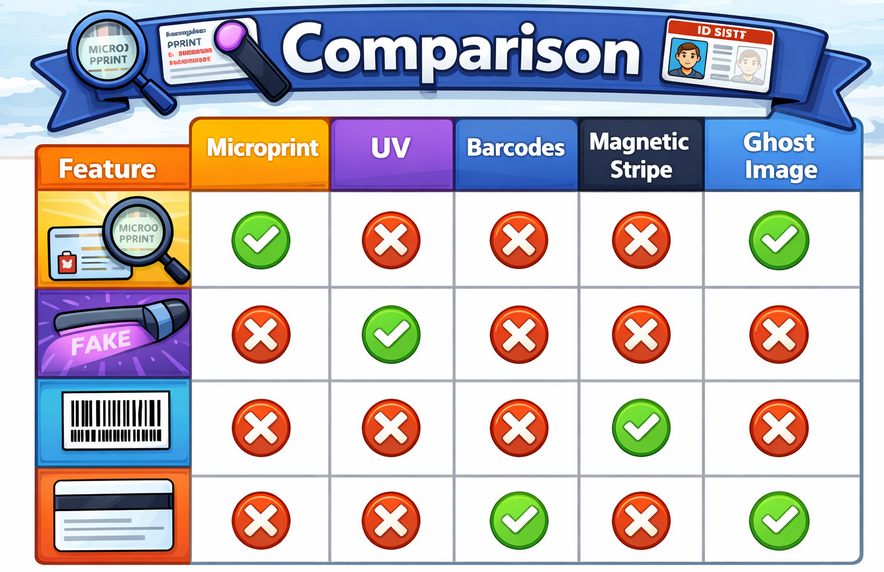
The fake ID market has become more sophisticated. Manufacturers keep improving their products to get past verification systems. The best fake id websites compete on three technical aspects that show how well their products pass inspection. These features continue to evolve as detection methods get better.
Scannability and barcode accuracy
Scannable fake IDs do more than just look real – they work with verification technology. ID scanners pull information from barcodes and magnetic stripes to check names, birthdays, and addresses. Modern counterfeits now include properly formatted data in these elements that passes simple scanning tests.
These fake IDs pose a real threat because they can copy barcode standards perfectly. States use specific encoding formats for their legitimate IDs. Quality counterfeits match these standards so well that scanning them shows valid information matching what’s printed on the card.
The best fake ID makers excel at:
- Creating exact barcode copies with special software
- Formatting data to match each state’s standards
- Encoding personal details that look legitimate during scans
Some vendors claim their products can pass electronic checks used by banks and crypto exchanges. No technology catches all fake IDs, but professional security scanning detects up to 95% of counterfeits.
Security features like UV and holograms
Quality fake IDs now include security elements that used to make IDs hard to copy. Real state IDs have up to 50 different security checks, including text and image verifications.
Holograms stand out as the most noticeable security feature. Real IDs use complex state-specific hologram designs that shift when viewed from different angles. You’ll see state symbols, landmarks, or security patterns that aren’t easy to copy exactly. To cite an instance, Pennsylvania added black-and-white holograms that flip colors when tilted.
UV-reactive elements give counterfeiters the biggest challenge. Most state IDs have ultraviolet security features you can only see under blacklight. These features show state outlines, backup photos, or hidden text. Real IDs display sharp UV patterns, while fakes often show blurry images or miss these features completely.
Advanced fake IDs try to copy other security elements like:
- Laser perforation – tiny holes making patterns visible against light
- Tactile features – raised text or elements you feel by touching
- Microprinting – small text you need magnification to read
Material quality: Teslin, PVC, Polycarbonate
The material construction matters just as much for convincing fake IDs. Government IDs use professional-grade card stock with secure laminates fused to the card – not just stuck on top. Material quality often provides the fastest way to spot fakes.
Professional-grade ID cards should flex smoothly and bounce back to shape. Fake cards might feel too stiff, rubbery, or split at the layers when bent. Lamination quality reveals the truth – real IDs have smooth, tough laminate that won’t bubble or separate when bent.
Top-tier fake IDs try to match these material standards by using:
- Multi-layer construction similar to government specs
- Professional-grade laminate that won’t peel
- Exact card measurements matching credit card size
Counterfeiters keep improving their methods as verification technology advances. Organizations now need systems that check both physical and encoded data at once to catch these sophisticated fakes.
What It Really Costs to Buy a Fake ID
The cost of counterfeit identification varies a lot in the market. Quality differences and business models play a big role in setting prices. A look at the actual costs shows complex pricing that goes beyond what you see on best fake id websites.
Price breakdown by provider
You’ll find fake IDs priced between $50 to $150 depending on who makes them. IDChief sells two copies of an ID for $150. FakeIDs.com offers cheaper options with novelty identification cards at $50 per person if you order 1-3 cards.
Some budget-friendly providers like Fake-ID.de sell student cards for entertainment at just $25. Hotfakeid.com sits in the middle range with IDs starting at $80, down from their original $140 price.
Materials make a big difference in pricing. Industry sources say the cost hierarchy usually goes:
- Polycarbonate: Most expensive
- PVC: Moderate pricing
- Teslin: More affordable
The quality level sets the final price. Premium IDs with advanced security features like custom holograms and MLi lenses cost way more than basic versions.
Hidden fees and shipping costs
First-time buyers often don’t expect the extra costs beyond the base price. Shipping speed can really change the total cost. Most sellers offer these options:
- Standard: Usually included in base price
- Rush: Moderate extra fee
- Overnight: Big premium
Your location affects the total cost too. US domestic shipping costs less than international shipping from overseas makers. US-based providers might charge more upfront but save you money on shipping.
Some vendors add extra charges for cryptocurrency or money transfers. These fees don’t show up in advertised rates but add to your final cost. Custom features like signatures or special elements also cost extra.
Group discounts and bulk orders
Every major fake ID service wants you to buy in groups. They offer tiered discounts. Hotfakeid.com uses four tiers:
- Tier 1: 10% off for orders of 3-6 IDs
- Tier 2: 15% off for orders of 7-10 IDs
- Tier 3: 20% off for orders of 11-16 IDs
- Tier 4: 30% off for orders of 20+ IDs
FakeIDs.com keeps it simple. They drop the per-card cost from $50 to $30 when you order four or more IDs. This 40% discount makes group orders a better deal.
College students often team up to get these volume discounts. An Ohio State student said he bought fake IDs with friends from IDGod.com and paid about $60 each.
Most providers throw in a duplicate ID at no extra cost. This gives you a backup if your first card gets taken or damaged.
DIY kits offer another cost option if you want to make your own IDs. Brainstorm ID Supply sells complete kits starting at $54.35 for 10 cards, and the price per card drops as you buy more. These kits come with all materials but you need technical know-how to make convincing IDs.
The Real Risks: Legal, Financial, and Personal
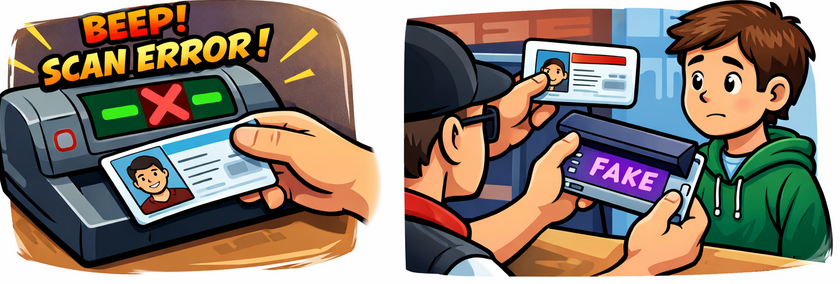
The best fake id websites promise easy solutions but can destroy your future in ways many buyers fail to see. These life-changing risks go far beyond the initial purchase price, and their effects can haunt you for decades.
Felony charges and fines
States have gotten tougher on fake ID possession, and many now treat these crimes as felonies. New Jersey treats fake ID crimes as second, third, or fourth-degree indictable offenses—equivalent to felonies in other states. The penalties will shock you: second-degree convictions can cost you up to $150,000 plus 5-10 years behind bars.
The punishment stays harsh even in states with softer laws. Pennsylvania treats fake ID possession as a summary offense with $300 fines and possible 90-day jail terms. The penalties get worse for repeat offenders—some places raise fines to $1,000 for later offenses.
The stakes rise dramatically for making or selling fake IDs. These felony charges can put you in prison for 10 years with fines reaching $100,000.
Background check problems
Most people don’t realize that fake ID convictions show up on background checks, even minor offenses. This happens because police fingerprint and photograph everyone caught with fake IDs, creating permanent records in law enforcement databases.
Fake ID convictions hurt so much because they count as “crimen falsi” or crimes of dishonesty. Employers see these offenses just like theft or forgery, which raises red flags about trusting applicants.
These convictions can wreck your adult life by affecting:
- College admissions and scholarship eligibility
- Professional licensing applications
- Housing rental approvals
- Future employment opportunities
Identity theft and data misuse
The buyers often become victims themselves. Customers give sensitive details—photos, addresses, payment information—to unknown criminals when buying from fake id sites. This creates a perfect setup for identity theft.
Criminal networks have grown more sophisticated in fake ID operations. The FBI discovered North Korean remote IT workers who used false identities to infiltrate more than 100 U.S. companies. These fraudsters accessed financial accounts and intellectual property before vanishing.
Victims of these breaches face devastating financial damage through unauthorized charges and ruined credit histories. A simple plan to get into age-restricted places can turn into years of financial and legal nightmares.
How to Avoid Getting Scammed
Looking up best fake ID websites puts you at risk of getting scammed. Modern scammers use sophisticated tactics and convincing storefronts to steal your money without delivering anything. You can protect yourself by learning these warning signs.
Check for real customer reviews
Smart research about where to get fake IDs goes beyond vendor website testimonials. Scammers can easily fake these reviews to build false trust. Real customer experiences shared on independent forums and review sites tell a better story. A good strategy compares reviews from different platforms. Multiple users complaining about the same vendor usually points to real issues.
Pay attention to review patterns that seem off. Watch for reviews that use the same words or lack specific product details. Real customers tend to mention both good and bad points instead of just praising everything.
Avoid Telegram-only or crypto-only sellers
Telegram scams targeting fake ID buyers keep rising, and many people lose money. Vendors who only use this platform need extra caution. Security experts warn that random additions to Telegram groups should raise red flags. This applies to “broadcast only” channels that look like legitimate businesses.
The same goes for sellers who only take cryptocurrency payments. While crypto offers privacy, sellers who refuse other payment methods often turn out to be scammers. Legitimate vendors usually give you several ways to pay.
Common warning signs include:
- Sellers who stick to Telegram only
- Accounts that won’t do video calls
- Messages that push you to pay quickly
Ask for sample images before paying
Smart buyers never pay without seeing sample work first. Legitimate fake ID for sale vendors keep portfolios that showcase their work quality. Ask to see recent examples of your state’s ID design and check the security features like holograms and UV marks.
Watch out for stock photos or stolen images that scammers often use. You can beat this trick by asking for a custom sample with specific details, like holding today’s newspaper. This simple check helps you spot scammers who can’t actually make IDs.
Better and Legal Alternatives to Consider
Legal identification options provide better alternatives than taking risks with best fake id websites.
Use of real government-issued IDs
Government IDs stand out as the most reliable choice. The REAL ID enforcement began May 7, 2025, and acceptable alternatives now include U.S. passports, military IDs, DHS Trusted Traveler Cards (Global Entry, NEXUS), and Permanent Resident Cards. These official documents give you proper identification without any legal risks.
Temporary IDs from DMV
Temporary driver licenses work great as short-term solutions when you’re waiting for permanent identification. The DMV issues these temporary documents as Class XD (regular passenger vehicles), Class XM (motorcycles), or identification-only licenses. People with federal government authorization can get these documents. These temporary IDs work as legal photo identification until permanent cards arrive, though they won’t work for commercial vehicles that need CDL.
Mobile driver’s licenses (mDLs)
Mobile driver’s licenses represent the future of identification. These digital versions of state-issued IDs stay secure on your smartphone. The federal government has approved mDLs in more than 21 states. Users can share specific information, make touchless transactions, and receive updates immediately. TSA now accepts these digital IDs at over 250 checkpoints nationwide. Your mDL stays safer than physical cards that thieves can steal or damage.
Conclusion
Fake ID websites have become more sophisticated and are available in 2026, but they come with serious legal and personal risks. Many college students see getting a fake ID as a cultural milestone. This seemingly harmless choice can lead to felony charges, hefty fines up to $150,000, and damage your future career prospects.
On top of that, it puts users’ sensitive personal data at risk of identity theft and financial fraud. Vendors claim their high-quality materials and security features can pass scanning tests. The truth is that law enforcement and businesses keep getting better at spotting fakes.
The market shows prices that vary widely between providers – from $50 to $150 per ID. Most sellers offer group discounts to push bulk orders. Notwithstanding that, these savings don’t match the costs you’ll face if caught.
Legal alternatives are a better choice than buying a fake ID. Government-issued identification, temporary DMV credentials, and the new mobile driver’s licenses give you legal options without putting your future at risk. You should watch for warning signs of scam websites, especially when they operate only through Telegram or take cryptocurrency payments. This helps protect your wallet and identity.
These websites might deliver convincing products with advanced security features, but they’re still a huge risk to your legal record, financial security, and personal data. A brief convenience of getting into age-restricted venues isn’t worth the consequences that could follow you for decades.
Key Takeaways
While fake ID websites have become increasingly sophisticated in 2026, the risks far outweigh any perceived benefits for users seeking age-restricted access.
• Legal consequences are severe: Fake ID possession can result in felony charges, fines up to $150,000, and 10-year prison sentences that appear on background checks permanently.
• Identity theft risk is high: Buyers provide sensitive personal data to criminal networks, creating perfect conditions for financial fraud and credit damage.
• Quality claims are misleading: Despite vendors claiming 89% success rates with UV tests and scanning, law enforcement detection methods continue improving rapidly.
• Scams are widespread: Many fake ID websites take payments without delivering products, particularly those operating exclusively through Telegram or accepting only cryptocurrency.
• Legal alternatives exist: Government-issued IDs, temporary DMV credentials, and mobile driver’s licenses provide legitimate identification without criminal risk.
The normalization of fake IDs among college students (32% admit possession) creates a dangerous illusion of safety, but the reality is that these websites represent criminal enterprises that exploit young people’s desire for social acceptance while putting their futures at serious risk.
FAQs
Q1. What are the legal consequences of using a fake ID?
Using a fake ID can result in severe legal penalties, including felony charges, fines up to $150,000, and potential prison sentences of up to 10 years. Even for first-time offenders, consequences often include hefty fines and possible jail time. These convictions typically appear on background checks and can negatively impact future employment and educational opportunities.
Q2. How do fake ID websites protect customer information?
In reality, fake ID websites often do not adequately protect customer information. When purchasing from these sites, customers typically provide sensitive personal data like photos, addresses, and payment details to unknown entities. This creates significant risks for identity theft and financial fraud. Many of these operations are run by sophisticated criminal networks that may misuse or sell this information.
Q3. Can fake IDs pass modern scanning and verification systems?
While some fake ID providers claim their products can pass electronic verification systems, the reality is more complex. Advanced counterfeit IDs may incorporate features like accurate barcodes and UV-reactive elements, allowing them to pass basic scans. However, law enforcement and businesses continually improve their detection methods. No fake ID is guaranteed to pass all verification systems, especially as technology advances.
Q4. Are there any legal alternatives to using fake IDs?
Yes, several legal alternatives exist for identification purposes. These include government-issued IDs like passports, military IDs, and DHS Trusted Traveler Cards. For those awaiting permanent identification, temporary driver’s licenses from the DMV serve as legitimate short-term solutions. Additionally, mobile driver’s licenses (mDLs) are becoming increasingly popular and accepted, offering a secure digital alternative to physical IDs.
Q5. How can I avoid getting scammed when looking for fake IDs online?
To avoid scams, be wary of vendors who operate exclusively through platforms like Telegram or only accept cryptocurrency payments. Always check for genuine customer reviews on independent forums, not just testimonials on the vendor’s website. Request sample images of their work before making any payment. However, it’s important to note that even when taking these precautions, purchasing fake IDs remains illegal and risky.